
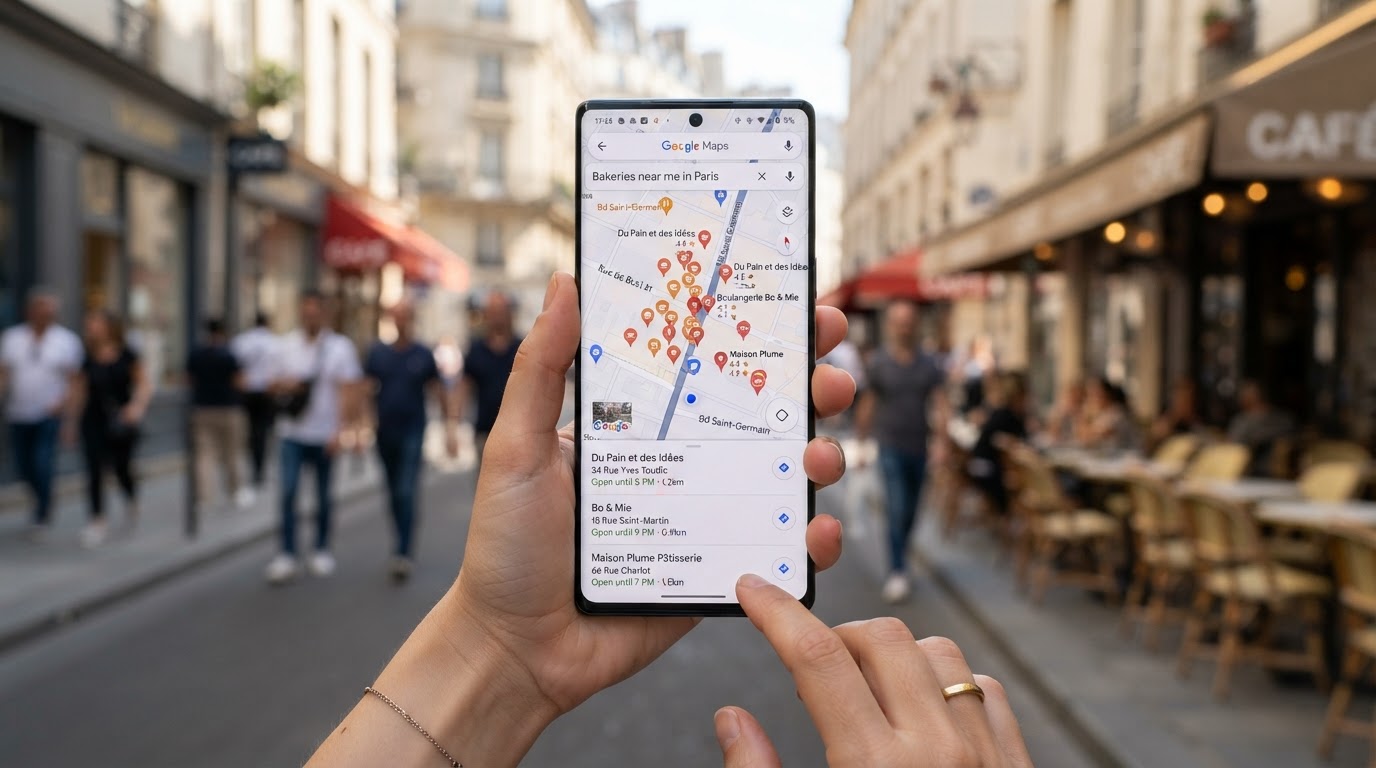
Pull out your phone right now and search for the service you offer in your own town. Do it the way a homeowner would — just the service and your city. Look at what comes up at the top of the page. See that row of three businesses with the map? That is the local map pack, and it is where the phone calls live. Now ask yourself honestly: are you in those top three spots? If you are not, you are living in what we call the Google Maps blind spot, and it is costing you jobs every single day.
Most contractors have never done this exercise. They set up a Google Business Profile years ago, assumed it was working, and never checked where they actually rank. When they finally look, they are usually shocked to find themselves buried below the top three — sometimes on page two, sometimes not even showing up for their own core service in their own town. The blind spot is the gap between thinking you are visible and the reality that you are invisible to most of the people searching for you. Let's break down why the top three matters so much, what keeps you out of it, and how to climb in.
Why the Top Three Own the Calls
The local map pack is the row of three businesses Google shows at the top of the page when someone searches for a local service. It sits above the regular search results, with a map and quick business info — name, rating, phone number, and a click-to-call button. This is prime real estate, and the businesses in it get the overwhelming majority of the clicks and calls from that search.
Here is the brutal truth about local search behavior. The vast majority of people who search for a local service never scroll past the map pack at all. They look at those three businesses, pick one based on the rating and reviews, and call. The businesses ranked fourth and below get a tiny fraction of the traffic. And anything on page two might as well not exist. If you are not in the top three, you are not a real option for most of the homeowners searching for your service, and the calls you should be getting are going straight to the three businesses above you.
The difference between ranking third and ranking fourth is not a small dip in calls. It is a cliff. Third place is in the map pack, seen by almost everyone who searches. Fourth place is below it, seen by almost no one. This is why we call it a blind spot — owners think being on the first page is good enough, but the real cliff is between the top three and everything else, and most owners do not even know which side of it they are on.
The Three Ranking Factors That Decide the Top Three
Google decides who goes in the map pack using three main categories of signals, and understanding them is the first step to climbing in. The first is relevance — how well your profile matches what the person searched for. This is driven mostly by your primary category and the keywords in your services and description. If a homeowner searches for a specific service and your profile is optimized for that exact service, you are relevant. If your category is too broad or your description is vague, you are not, and you lose to the competitor who matched the search better.
The second factor is distance — how close your business is to the searcher. Google shows businesses that are near the person searching, which is why your service area and your address matter so much. This is also why ranking in your own town is easier than ranking in the next town over, and why a competitor physically closer to the searcher can outrank you even if your profile is better. You cannot change where you are located, but you can make sure your service area accurately reflects everywhere you actually work.
The third factor is prominence — how well-known and trusted your business is, online. This is where reviews, photos, citations, and overall online activity come in. A business with a steady stream of recent reviews, real job photos, and consistent information across the internet looks more prominent to Google than one with old reviews and a half-empty profile. Prominence is the factor you have the most control over, and it is where most contractors are leaving the biggest opportunity on the table.
The Fixes That Move You Up
Climbing into the top three is not about gaming the system. It is about fixing the specific signals Google is already reading, and most of them are straightforward. The first fix is your primary category. Most owners pick a broad category when a specific one is available, and that single choice can keep them out of the map pack for the exact service they want to rank for. Find the most specific category that matches the bulk of your work and make it your primary one. This alone can move you up for the searches that matter most.
The second fix is reviews, and specifically recent reviews. Google weighs recency heavily, so a profile with a steady drip of new reviews outranks one with more total reviews that are all old. The way to win this is an automated review pipeline that asks every happy customer for a review right after the job, so fresh reviews come in every week instead of in random bursts. We have seen profiles climb multiple spots just from a consistent flow of new reviews over a couple of months.
The third fix is real job photos. Google rewards profiles with a healthy number of native photos taken at real job sites, because the photo files carry hidden location and date data that proves the business is active. Add real photos regularly — your truck, your crew, before-and-after shots, finished work. Skip stock photos, which Google can spot and which add no value. A profile that grows with real photos signals an active, legitimate business, and that signal helps your ranking.
The fourth fix is citation consistency. Your business name, address, and phone number need to be identical across every directory on the internet — Yelp, Apple Maps, Bing, Yellow Pages, and the dozens of others. Every mismatch is a signal of confusion to Google and lowers your ranking. Cleaning up your citations so the information matches everywhere is tedious but powerful, and it is one of the most reliable ways to climb the map pack over time.
The Silent Killer Nobody Talks About
There is one more thing that keeps contractors out of the top three, and it is the one almost nobody mentions: inactivity. Google wants to show businesses that are alive and active, not ones that set up a profile once and forgot about it. A profile that has not been updated in a year, has no new photos, and has no new reviews looks like a business that may have closed. Google quietly demotes it in favor of businesses that are clearly still in operation and still serving customers.
This is why a one-time optimization is not enough. The businesses that stay in the top three are the ones that keep their profile active — new reviews coming in, new photos being added, new posts on the profile, and consistent citations being maintained. It is not about doing a big push once. It is about keeping the profile alive over time, the way a healthy storefront stays open and active. The businesses winning the map pack treat their Google profile like a live part of their business, not a set-it-and-forget-it task.
How to Find Your Own Blind Spot
The first step is simply to look. Search for your core service in your own town, the way a customer would, and see where you land. If you are not in the top three, you have found your blind spot, and every day you leave it unfixed is another day of calls going to the businesses above you. The good news is that the fixes are known and repeatable, and most contractors can climb several spots within a couple of months by addressing the signals Google is already reading.
If you want to know exactly where you stand and what is keeping you out, grab a free audit. We will pull your profile, show you where you rank against the top three in your area, and break down the specific gaps between you and the leaders — the category, the reviews, the photos, the citations. Then we tell you the single highest-impact fix to start with, so you stop guessing and start climbing. The map pack is not a mystery. It is a set of signals, and once you know which ones are holding you back, you can fix them and start claiming the calls that are already searching for you.
Find Your Blind Spot Before Your Competitor Does
We pull your profile, show you exactly where you rank against the top three in your town, and tell you the single highest-impact fix to start with. Let's stop the calls from going to the businesses above you.